

Ponto Cem Réis
This sign is part of the Rota do Samba de Vila Isabel – Os Três Apitos circuit. Click here to access the interactive map with all the locations and discover this and other circuits.
The era of trams in the city began with the Companhia Carris de Ferro, which connected the city center to Alto da Boa Vista in Tijuca. The Royal Family inaugurated the line in 1859. During this period, the trams were drawn by animals. In 1868, Irineu Evangelista de Souza (the Baron of Mauá), an industrialist, banker, and politician who was the richest man in Brazil, established the first regular tram line in Rio de Janeiro with the help of Charles Greenough, the former chief engineer and manager of a tram line in the United States, and Thomas Cochrane, a Scottish homeopathic doctor.
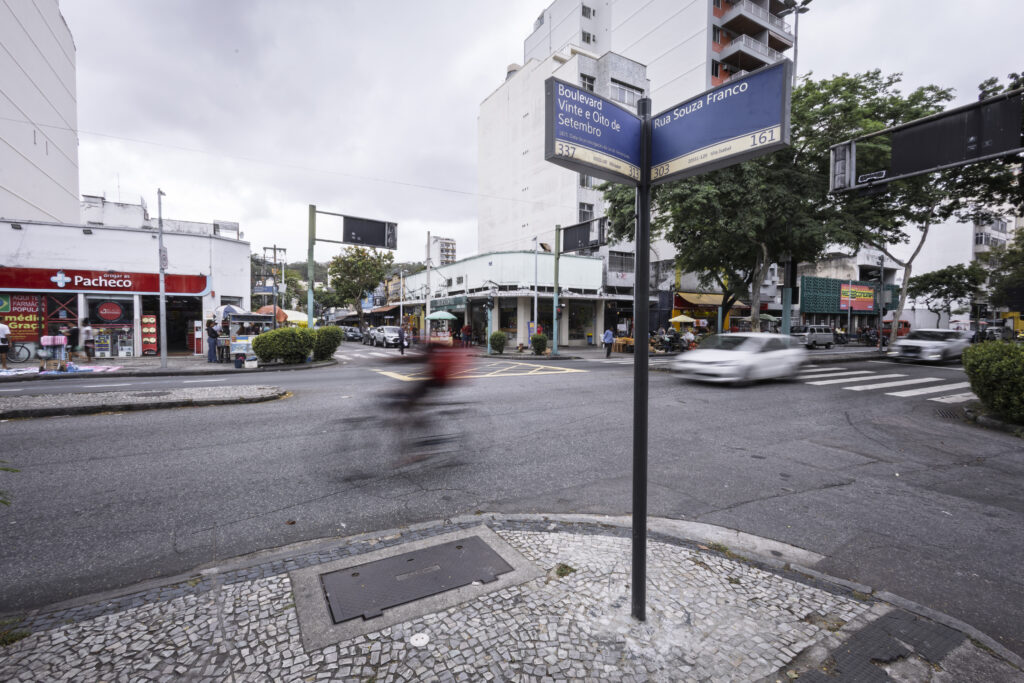
In 1871, João Batista Vianna Drummond founded the Companhia Ferro Carril de Vila Isabel. In February 1872, Drummond asked Teodoro Machado Pereira da Silva, the Minister of Agriculture, to implement a tram line running from the city to Fazenda do Macaco. The seven-kilometer stretch from the city to Vila Isabel opened in 1873. The tracks were installed, and the trams began operating on Avenida Boulevard 28 de Setembro. From that moment on, the region of Fazenda do Macaco was definitively called Vila Isabel. At the intersection of Boulevard 28 de Setembro and Souza Franco Street, passengers transferring to Engenho Novo had to pay an additional fare. This tram stop became known as “Ponto Cem Réis” (One Hundred Reais Stop) due to the fare change. Ponto Cem Réis was also the stop for workers at the Confiança textile factory. Bars related to the tram appeared in this area, such as Bar Parada Obrigatória and Café Cem Réis (now Capelinha), which was a meeting place for Noel and other samba musicians.