

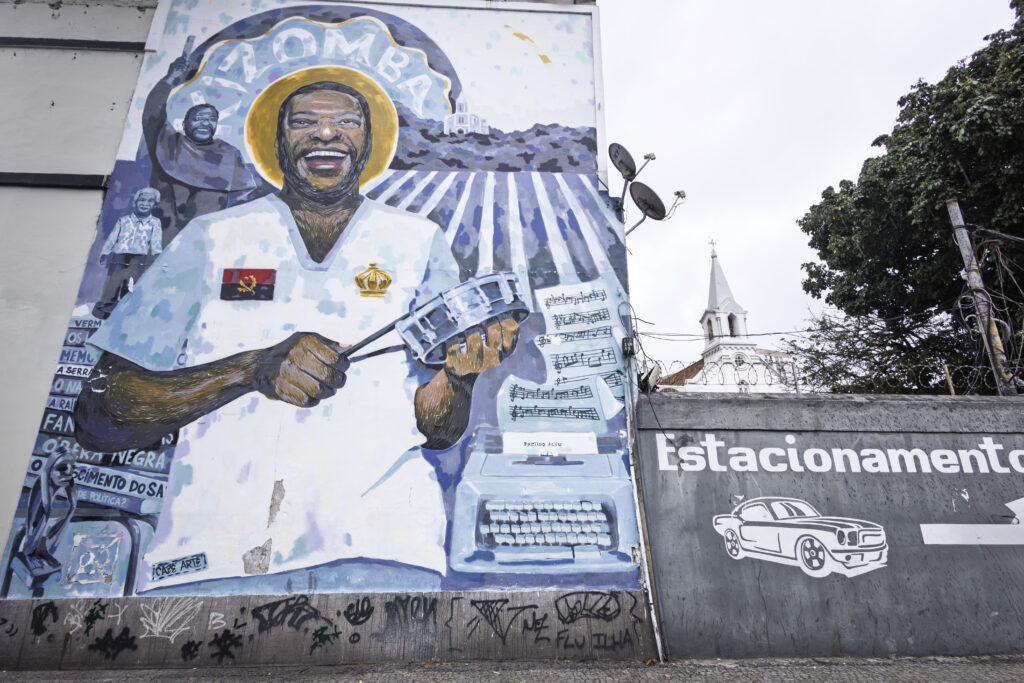
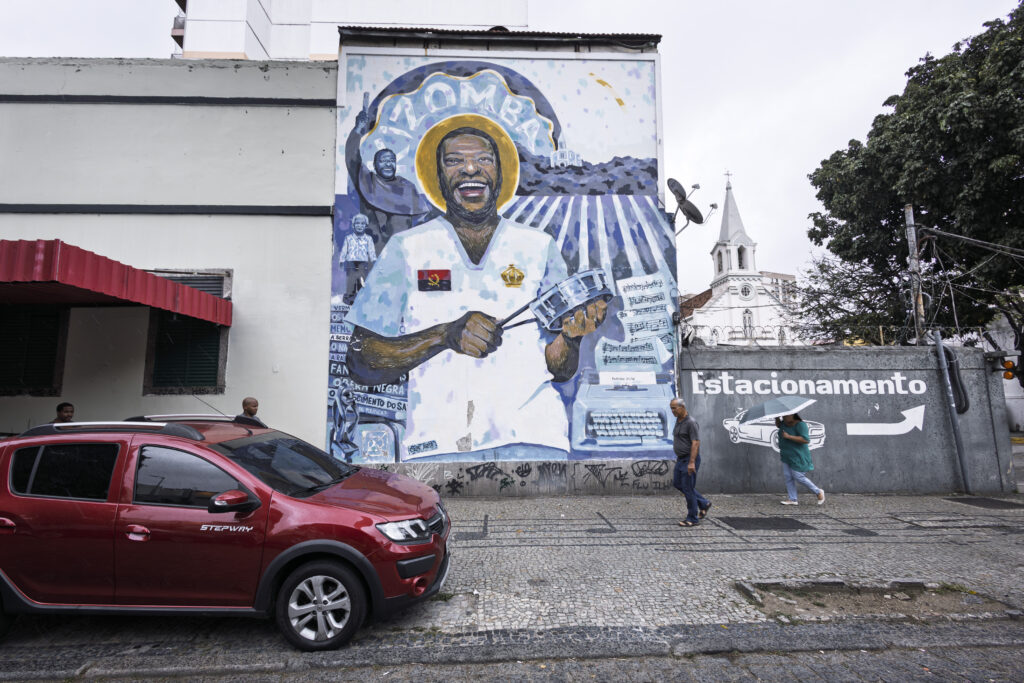
Black Panel Wall of Martinho da Vila
This sign is part of the Rota do Samba de Vila Isabel – Os Três Apitos circuit. Click here to access the interactive map with all the locations and discover this and other circuits.
Martinho José Ferreira, better known as Martinho da Vila, was born in 1938 in Duas Barras, a town in the mountains of Rio de Janeiro. The son of farmers, Martinho moved with his family to Rio de Janeiro at the age of four. They settled in the Boca do Mato slum in the Lins de Vasconcelos neighborhood in the northern part of the city. The mountain range is named after its historical occupation by fugitive and freed slaves. This territory was fundamental to the artist’s cultural formation. As a teenager, Martinho joined the local samba school, Aprendizes da Boca do Mato. At 15, he paraded singing a samba theme song he had written about Carlos Gomes. Before devoting himself to a professional career in samba, Martinho worked as a military bureaucrat, serving as an accountant and clerk until 1970.
His relationship with Vila Isabel began in 1965, when he was invited to organize the composers’ wing of the school and adjust the cadence of the samba songs by shortening and melodizing them. While involved with the association, Martinho joined the school as a composer. In 1967, he and Gemeu, who was already a member of Unidos de Vila Isabel, composed the samba theme song “Carnaval das Ilusões” (Carnival of Illusions).
He officially began his career as a singer in 1967 with the song “Menina Moça,” followed the next year by “Casa de Bamba,” one of his greatest classics. In 1969, he released his first album under the stage name Martinho da Vila. The album featured hits such as “Pra Que Dinheiro,” “Quem É do Mar Não Enjoa,” “Tom Maior,” and “Pequeno Burguês.” In the 1970s, he incorporated strong influences from Angolan Bantu culture into his music. This broke with the whitening of samba that began in the 1940s, highlighting the genre’s Afro-diasporic roots. Throughout his life, he wrote music in various styles, including ciranda, frevo, samba de roda, capoeira, bossa nova, calango, toada, and African sambas.
In 1988, he conceived the plot “Kizomba, a Festa da Raça” (Kizomba, the Race Party), which earned Unidos de Vila Isabel its first title in the Special Group. This plot featured an innovative aesthetic and black protagonism. A prolific author of more than 15 books and with over 50 albums released, Martinho has won three Latin Grammy Awards and holds honorary doctorates from universities in Brazil and Angola. He was the subject of Vila Isabel’s 2022 theme and is currently the school’s Honorary President. Like Noel Rosa, Martinho is a cultural icon of Vila Isabel, representing Brazilian culture, social struggles, and Afro-Brazilian heritage through samba.