

Leblon Observation Deck/Av. Niemeyer
This board is part of the ‘Ipanema/Copacabana’ circuit. Click here to see more about this and other circuits.
Niemeyer Avenue is one of Rio de Janeiro’s most iconic roads, not only for its breathtaking views but also for its role in the city’s infrastructure. The road was conceived in the late 19th century, as part of a project to build a railway to connect Botafogo and Angra dos Reis. The original project began in 1891, with the aim of carving a route through the hillsides. However, challenging geographic conditions and scarce financial resources delayed construction work for nearly two decades.
The plan was resumed in the early 20th century, now as a road for cars. The road was inaugurated on 20 October 1916 and was named after Commander Conrado Jacob Niemeyer, who financed its construction.
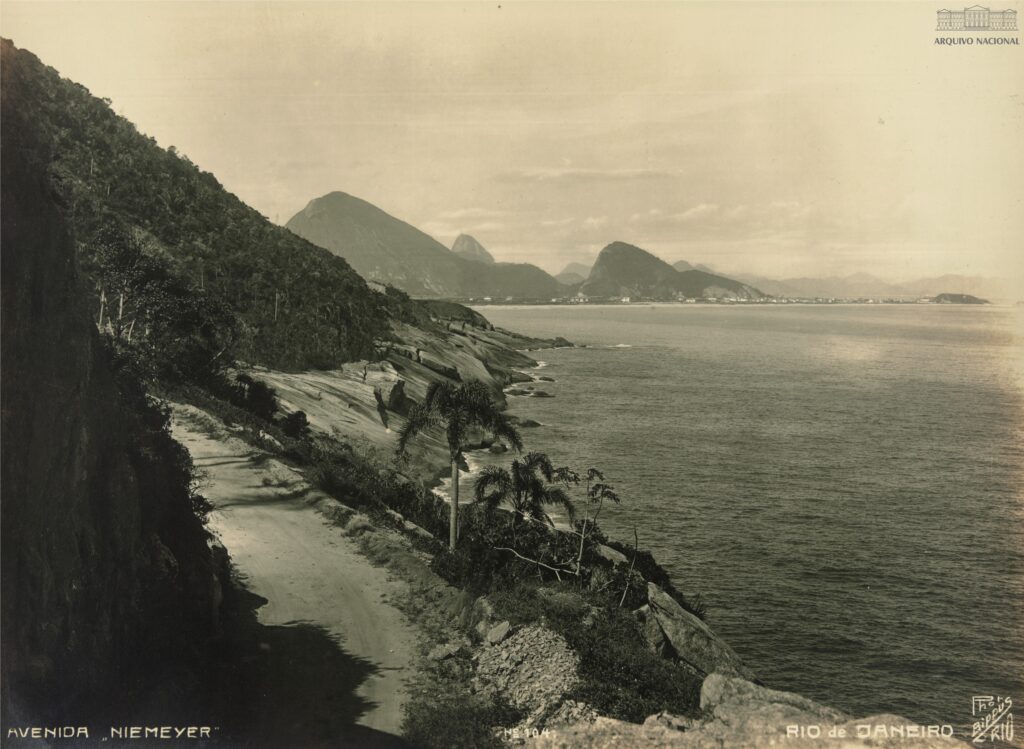
View from Niemeyer Avenue, Rio de Janeiro, in the 1920s. National Archive. Miscellaneous Photographic Collection
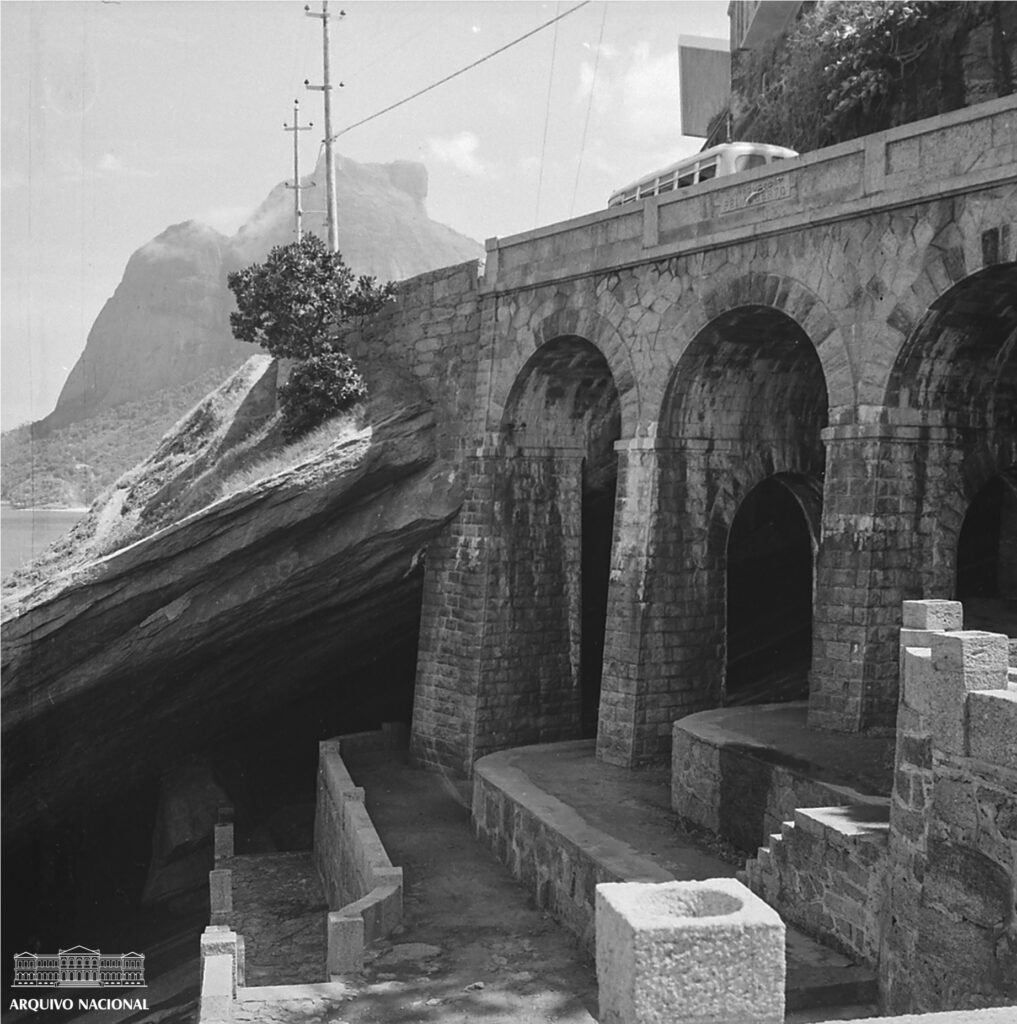
Shortly after its inauguration, Niemeyer Avenue underwent improvements for the visit of King Albert I of Belgium and gained two landmarks. A viaduct was built and named in the monarch’s honor, along with the “Press Grotto”, inaugurated in 1920, just days before the Belgian royals’ visit to Brazil. According to reporting in the newspapers Correio da Manhã and O Globo, the grotto was a tribute by Mayor Carlos Sampaio to the Rio de Janeiro press corps. It is a vast natural platform that projects over the ocean, forming a grotto that can be reached via balustraded steps. The sea crashes with force there but does not present any danger. The inscription “Press Grotto” is set in cement at the entrance.
In the 1930s, journalists gathered there to cover car races. Crowds would flock to watch the so-called ‘baratinhas’ compete on the ‘Gavea Circuit’, nicknamed the “Devil’s Trampoline” because of its frequent accidents—some of them fatal, such as the crash that killed the champion Irineu Corrêa in 1935.
In the 1970s and 1980s the avenue became associated with another icon: The Vip’s Motel (a short stay hotel for romantic liaisons) considered the most famous in Brazil. Its privileged location became legendary. According to Ambassador Marcos de Azambuja:
“Vip’s was simply the best motel in the world. I can say this without fear of contradiction, on the basis of the most reliable record there is: my memories of long-gone nights, when Rio de Janeiro was the best city that ever existed. The position of the building was perfect. It faced the sea with the forest behind it, so guests were not seen by anyone and didn’t see anyone.”

But the avenue also holds some tragic memories, such as the murder of the young woman Cláudia Lessin Rodrigues, in 1977, and the collapse of the Tim Maia cycle path in 2016, which led to the deaths of the engineer Eduardo Marinho Albuquerque, 54, and Ronaldo Severino da Silva, 60. Landslides, especially in the rainy season, have also left painful scars over the decades.

The Leblon viewpoint at the beginning of the Niemeyer Avenue, is a popular tourist spot known for its panoramic views of the Ipanema and Leblon shorelines. In the 19th century, the area was known as Ponta do Leblon and was used mainly for fishing, before becoming a place for contemplation thanks to its privileged views. In 2007, it was officially named the Hans Stern Viewpoint, in honor of the German-born Brazilian jeweler.
Connecting affluent neighborhoods such as Leblon to communities like Vidigal and Rocinha, the 4.76 km stretch of Niemeyer Avenue has become a symbol of contrasts. It forms a geographic and cultural link between different social realities in Rio de Janeiro. It could be said that Niemeyer Avenue somehow depicts Rio itself: a symbol of the contrasts and encounters that make the city what it is: complex, beautiful and rich with stories.
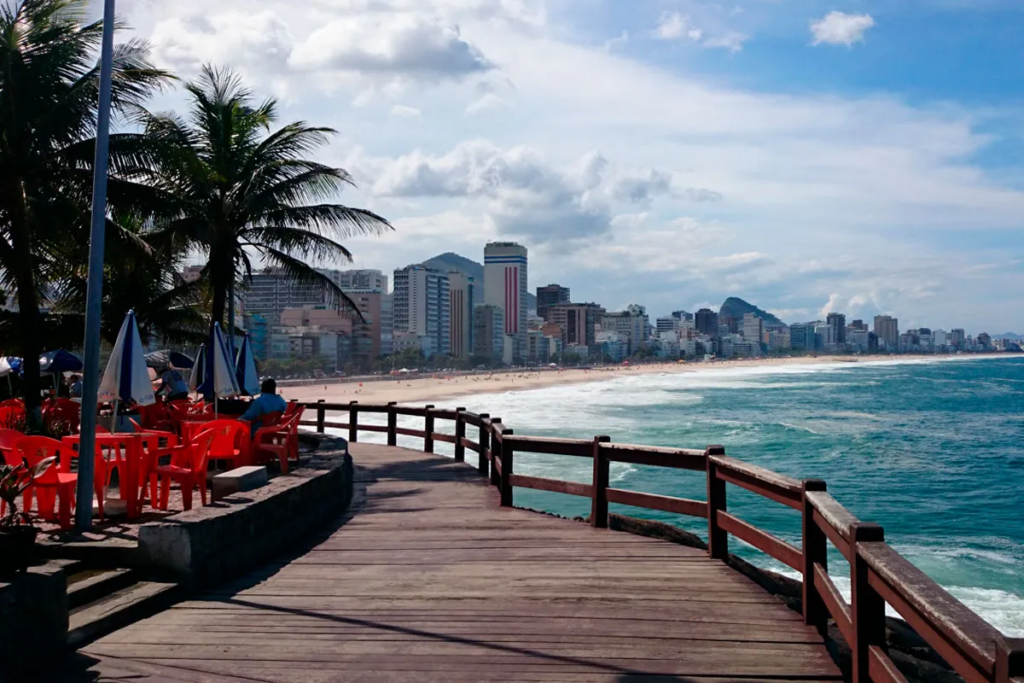
Reprodução site Tourb