
Monument to Noel Rosa
This sign is part of the Rota do Samba de Vila Isabel – Os Três Apitos circuit.
Click here to access the interactive map with all the locations and discover this and other circuits.
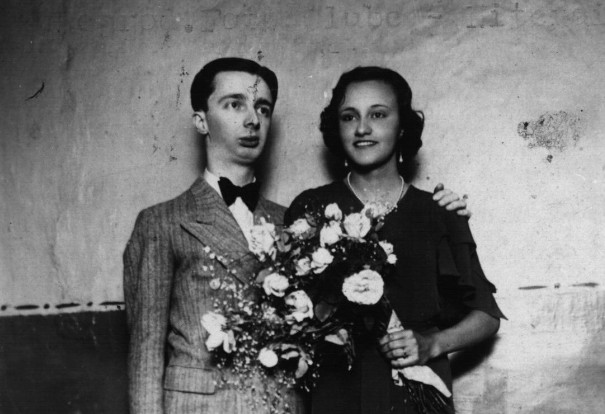
Noel de Medeiros Rosa was born on December 11, 1910, in the Vila Isabel neighborhood in northern Rio de Janeiro. He was delivered via forceps, leaving a permanent mark on his chin. The son of a middle-class family, he grew up in a musical environment that would influence his future career. His first instrument was the mandolin, which he learned to play with his mother. He attended the prestigious Colégio São Bento and enrolled in medical school but dropped out to pursue his true calling: music.
He began his artistic career with the Bando de Tangarás, a group founded by Almirante in 1929 that recorded musical genres such as cocos, emboladas, and maracatus. This revealed Noel’s closeness to Brazilian popular music. He was a regular at Rio de Janeiro’s main samba venues, such as Mangueira, São Carlos, the Macacos hills, the Festa da Penha, and Lapa’s bars. He circulated in Black social circles and formed unprecedented partnerships with Black samba musicians. He discovered samba in Rio’s favelas and helped bring it to the streets and major radio stations, contributing to the genre’s growth.
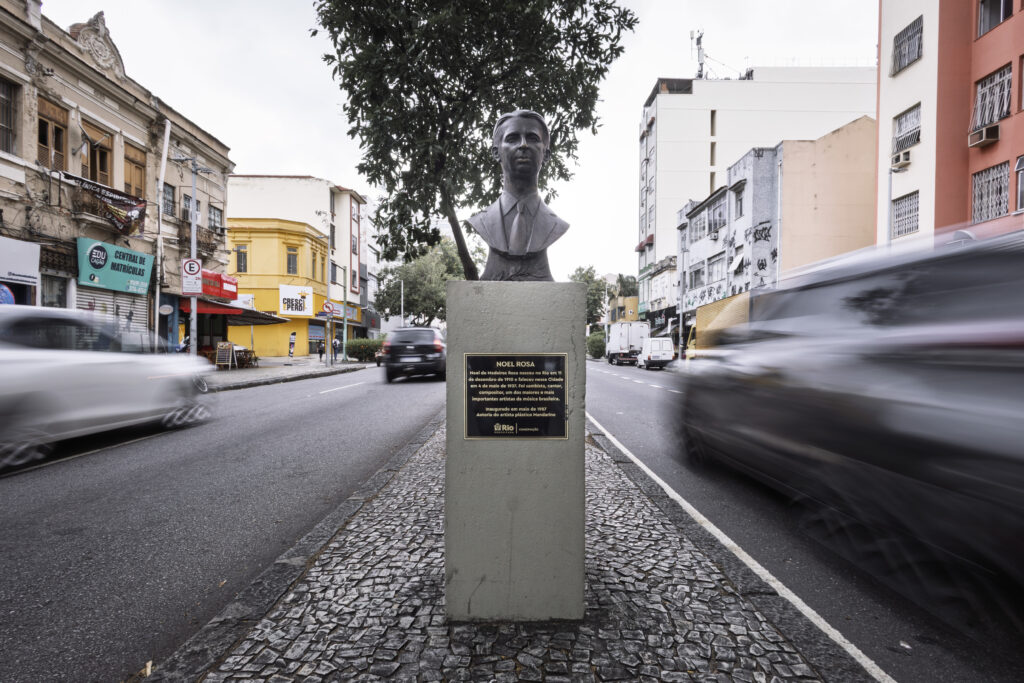
Noel collaborated with renowned artists such as Cartola, Ismael Silva, Heitor dos Prazeres, Vadico, Orestes Barbosa, and Francisco Alves. Noel wrote simple, direct, and popular poetry deeply connected to everyday life. He wrote about hunger, money, malandragem (streetwise cunning), work, the favelas, and urban life, often mixing humor and drama. In just six years, he composed more than 250 songs, many of which are considered Brazilian music classics. The singer Aracy de Almeida was his primary interpreter.His personal life was marked by controversy and intense love affairs. For instance, he married Lindaura Martins and had a romance with Ceci, a dancer and prostitute from Lapa who inspired songs such as “Dama do Cabaré” (“Lady of the Cabaret”). Afflicted with tuberculosis, he passed away on May 4, 1937. He is still remembered in Vila Isabel, particularly through the sculpture on Boulevard 28 de Setembro, which references the samba “Conversa de Botequim.” Noel Rosa, the “Poet of the Village,” popularized samba and helped transform it into a symbol of national identity.