

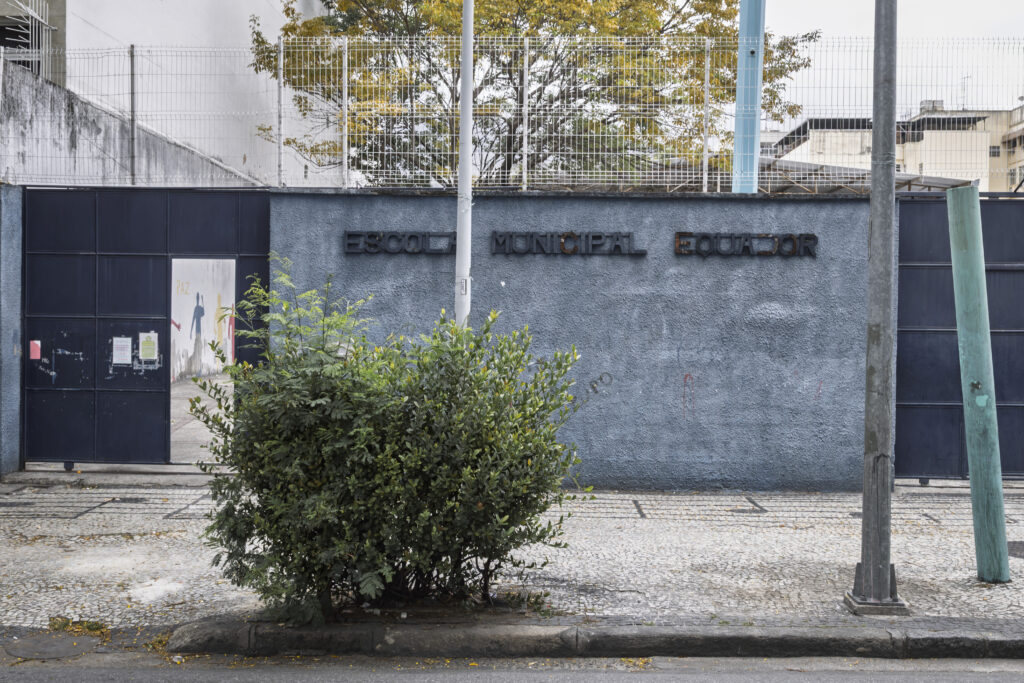
Equador Municipal School
This sign is part of the Rota do Samba de Vila Isabel – Os Três Apitos circuit. Click here to access the interactive map with all the locations and discover this and other circuits.
The Eça de Queirós Municipal School opened in 1934 during the Vargas administration. Named after the South American country, the school currently primarily serves students from Morro dos Macacos. The school’s relationship with the neighborhood community extends beyond the school grounds.
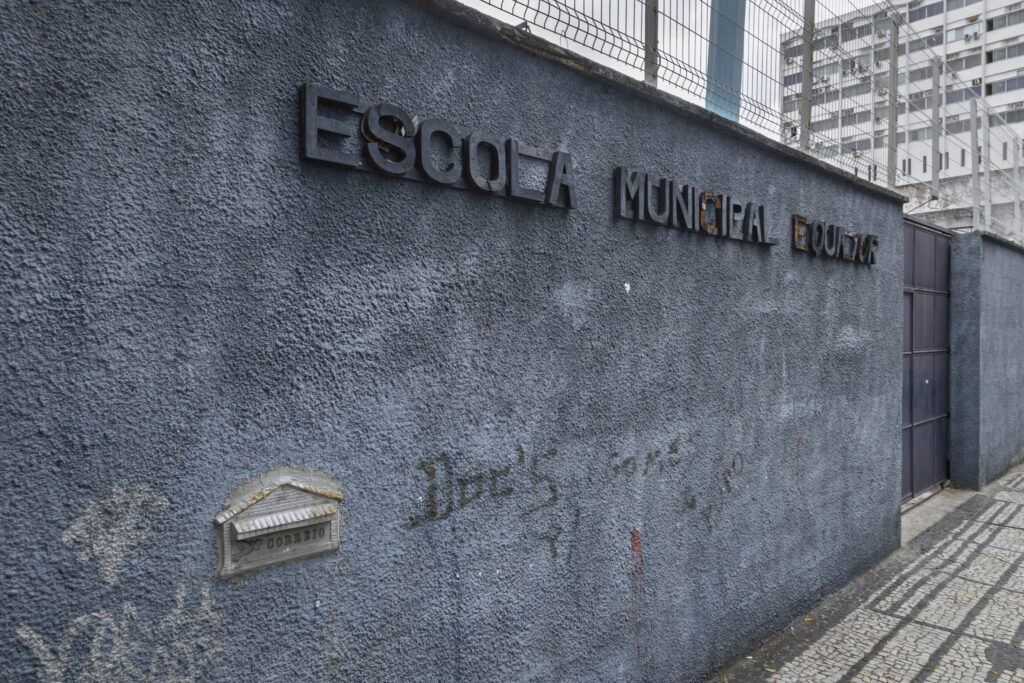
Historically marked by financial instability, the Unidos de Vila Isabel samba school has used various spaces as rehearsal venues since its foundation, including Seu China’s house, the Clube Maxwell, the Campo Atlético do América Futebol Clube, and the Atlética Vila Isabel Association. Unidos de Vila Isabel has also used other locations on Boulevard 28 de Setembro until arriving at its current headquarters. The winning 1988 samba theme song, “Kizomba, a Festa da Raça” (Kizomba, the Race Party), denounced this reality by stating, “Our headquarters is our headquarters,” highlighting the school’s lack of structure at that time. During the severe financial crisis of the 1990s, Vila Isabel was left without a fixed rehearsal location and began using the facilities of the Municipal School of Equador. Some rooms were transformed into sewing workshops, and the court, which was used for physical education classes, became a rehearsal space for the samba school. Following the 1993 parade, during which Vila Isabel presented the theme “Gbala,” City Hall promised to build a new gym on the grounds of the Rio de Janeiro Public Transportation Company (CTC).
The history of the Equador Municipal School is also intertwined with that of Leci Brandão, one of the most prominent figures in Brazilian samba. Born in Madureira on September 12, 1944, Brandão was raised in Vila Isabel in a rooming house on Avenida 28 de Setembro, near the school. Her mother, Dona Lecy Assumpção Brandão, worked as a servant there. An only child, Leci helped her clean the school building during morning, afternoon, and evening shifts. She often referenced this experience in her political speeches. Leci later became the first woman to join the Mangueira Composers’ Wing in the 1970s. She was also the first to serve four consecutive terms as a state representative. Leci dedicated her work to fighting for racial equality and defending African-based religions, indigenous peoples, quilombolas, and the LGBTQIAPN+ population.
In the context of social struggles, she found Zé do Caroço, the historical leader of Morro dos Macacos, to be a symbol of popular resistance. José Mendes Silva (Zé do Caroço) installed a loudspeaker system in the community to inform residents about news, deaths, educational activities, and weather alerts. This activity angered the wife of a military officer, who reported him. The ensuing controversy made headlines during the Ernesto Geisel administration (military dictatorship). Inspired by his story, Leci Brandão wrote the samba anthem “Zé do Caroço” in 1978 and officially recorded it in 1985. The song celebrates the strength of community organization and popular culture in Vila Isabel.