

Copacabana Boardwalk
Ana Clara Tavares
Proofreading: Claudia Grangeiro da Silva Castro
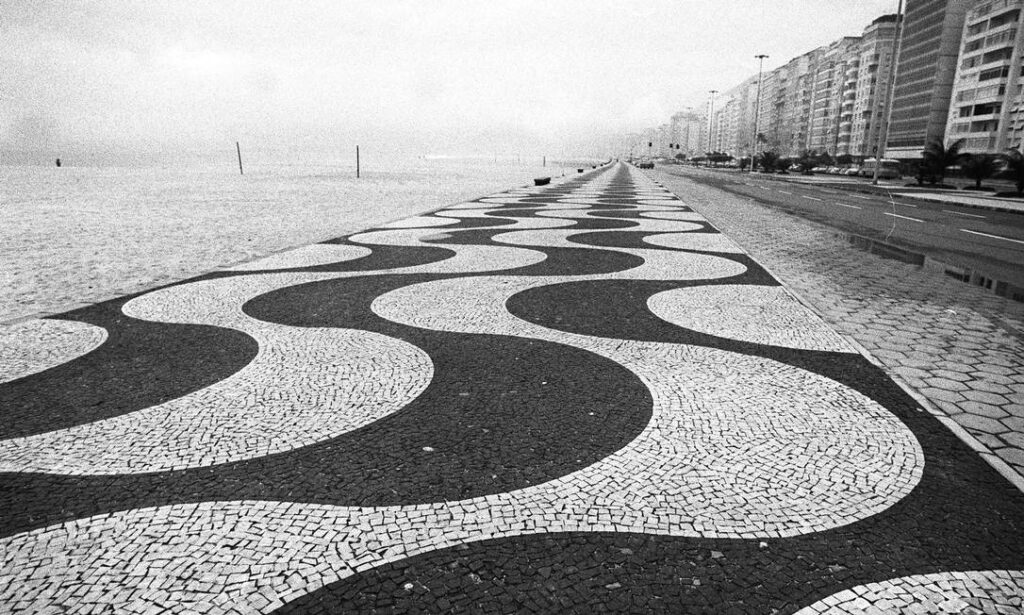
The Copacabana Boardwalk, a cultural landmark of Rio de Janeiro, is one of the most famous sights in the world. Yet this symbol, one of the most iconic in the city, is not a local creation. It was constructed using Portuguese stones (white limestone and black basalt), during the great transformations championed by Mayor Pereira Passos in the early 20th century. The undulating design along Avenida Atlântica is a reproduction of the pattern seen in Rossio Square in Lisbon.
To ensure fidelity to the original design, the Copacabana promenade was laid by pavers brought from the Portuguese capital. Building work commenced in 1906 and lasted around two years. The Boardwalk originally featured a quite different design, running perpendicular to the beach.
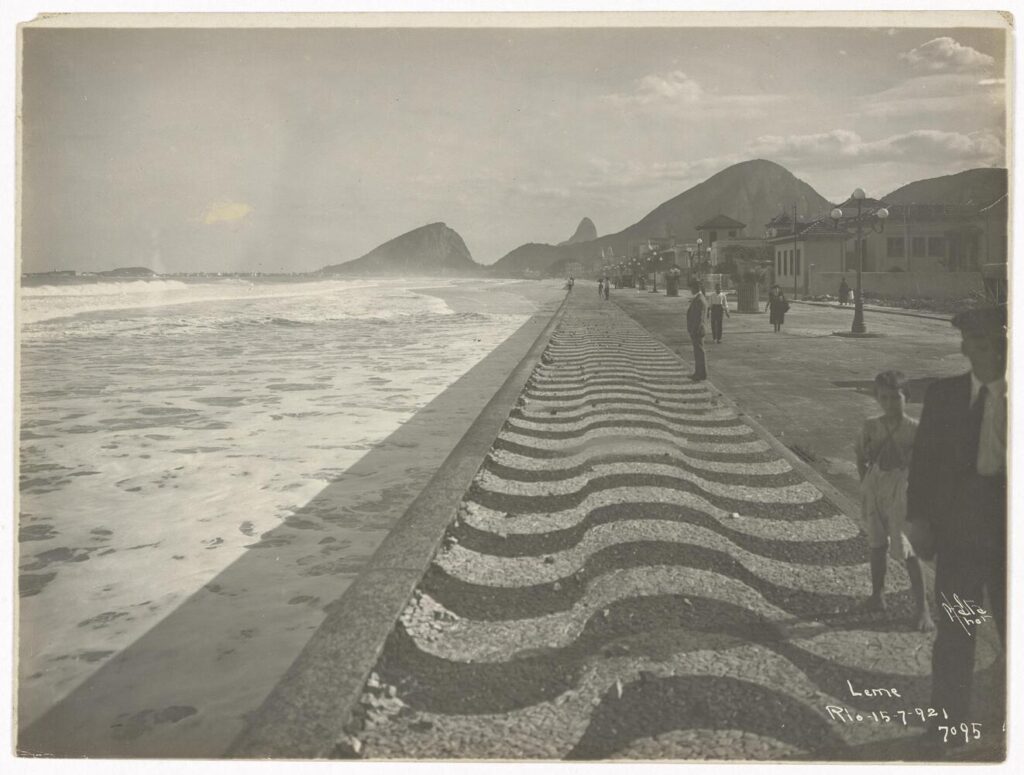
Augusto Malta. Storm surge at Leme Beach, Rio de Janeiro, 1921. Pedro Corrêa do Lago Collection, Moreira Salles Institute.
Between the 1920s and the 1950s, Copacabana became the symbol of a modern and glamorous Rio. When Walt Disney, acting as cultural envoy for the United States in Brazil, under the so-called ‘Good Neighbor Policy’, created the character Zé Carioca to show Donald Duck around Brazil, the wavy design on the pavement beneath their feet left no doubts as to where they were – while at the same time cementing Copacabana´s role as a national symbol.

Reproduction from the internet
The design change happened when the boardwalk was dismantled during sanitation improvements and the widening of Avenida Atlântica between 1969 and 1971. The renowned landscape architect Roberto Burle Marx was in charge of reconstructing the promenade and with his touch of genius he turned the pattern around to create the design we know today—giving the appearance that the pavement is a continuation of the sea.
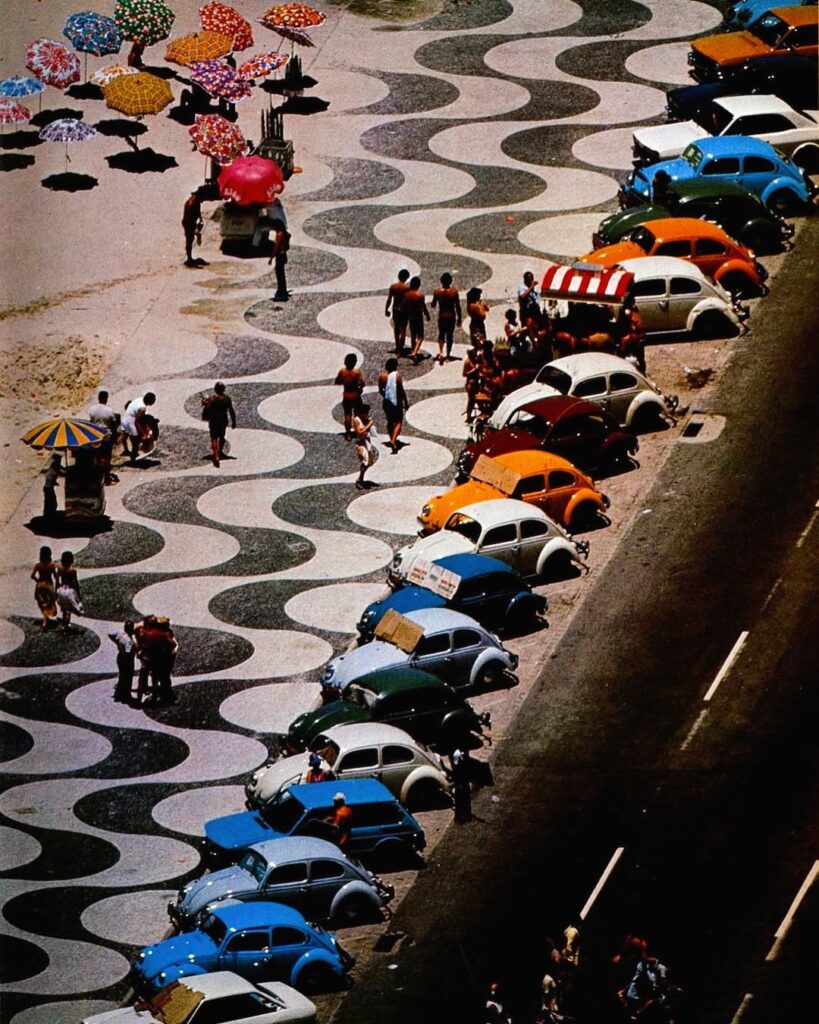
Photo by Bernard Hermann, 1974. Featured in the book “RIO” – Les du Pacifique / Distribuidora Record
Nowadays, the wide black and white waves in a repeating pattern with alternating tones, adorn bags, shirts and appear in films, songs, works of art, and advertisements celebrating the Rio de Janeiro lifestyle.
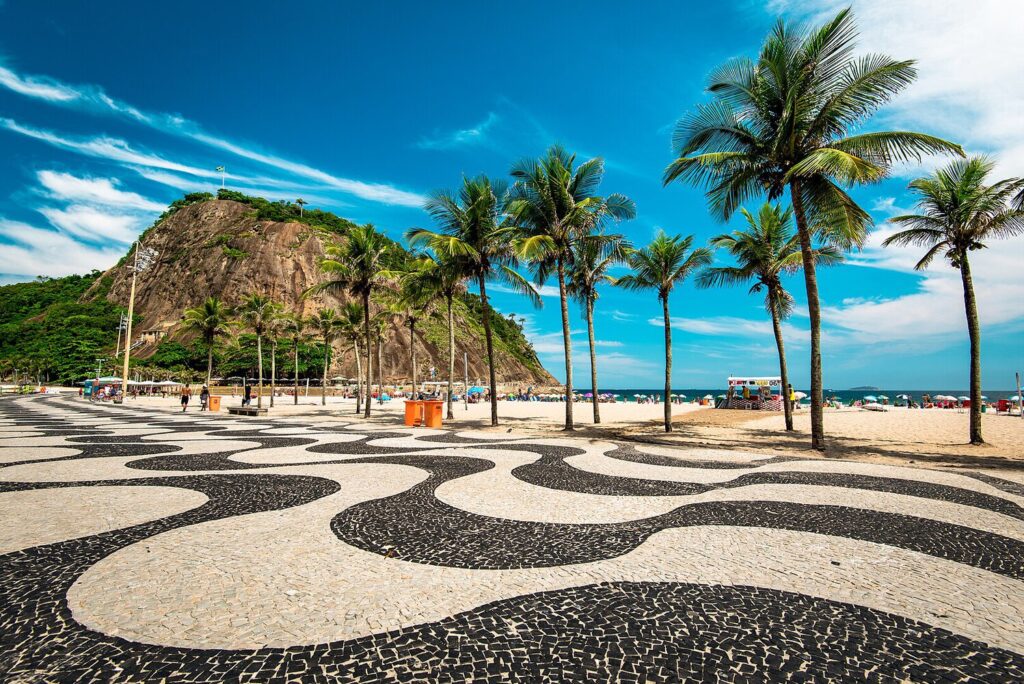
Donatas Dabravolskas. Copacabana Boardwalk, undated. Reproduction Wikimedia Commons