Rio Atlântico

CURADORIA

Monica Lima

Aí está ele, o mar, o mais ininteligível das existências não humanas

Clarice LispectorÁguas do Mundo


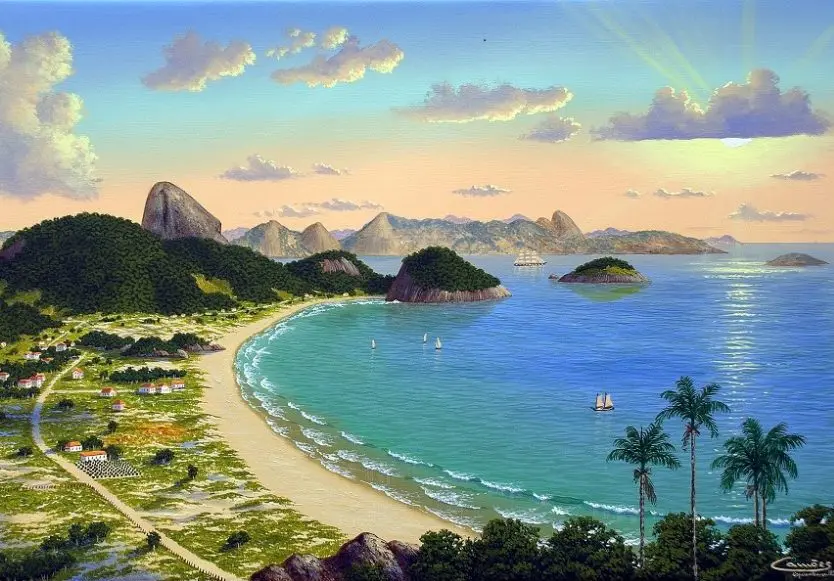
Rio de Janeiro is an Atlantic city, as the maps indicate and Geography asserts. But, History makes Rio an Afro-Atlantic city: its relationship with the Ocean Sea happened largely because it connected with this other shore, and its importance in what is called the Atlantic World arises mainly from its connection with Africa. Rio de Janeiro is a port city, a place of arrivals and departures, and also a link with the inland routes that connect the sea – on all its shores – with the country's interior.

The sea, with its sounds and images, is an element that runs through all the rooms.
Explore as salas

Um rio que mora no mar

Rio brings a river in its very name, and since it was born thus, they thought it was: the mouth of a river. Guanabara Bay deceived the navigators, perhaps by presenting itself with so many fresh waters that fed it. What was actually true, at the moment the foreigners saw it for the first time, is that its Atlantic Ocean was nourished by it, and in it, dolphins and whales that circulated in its calm waters would frolic. It was a haven that the sea waters found to relax, to let themselves be enveloped by the fresh and voluminous waters of the rivers that descended from the mountains of the Serra do Mar. Today, many of these rivers are channeled, they became parched and were even transformed into ditches. But, the city is still marked by these waters, which sometimes rebel and escape from the undergrounds in which they were confined, and from the rectilinear layouts imposed upon them. They overflow, uncontrolled, and reclaim their territories, they knock down, destroy, they take revenge. And when the ocean enters a surge, raising its waves and advancing over the sands of the beaches and over the rocky reefs, many channels, lagoons, and rivers of Rio also rise, connected as they are. Ah, the force of the waters…

enter

Explore as salas

Quer saber mais sobre a história do Rio?