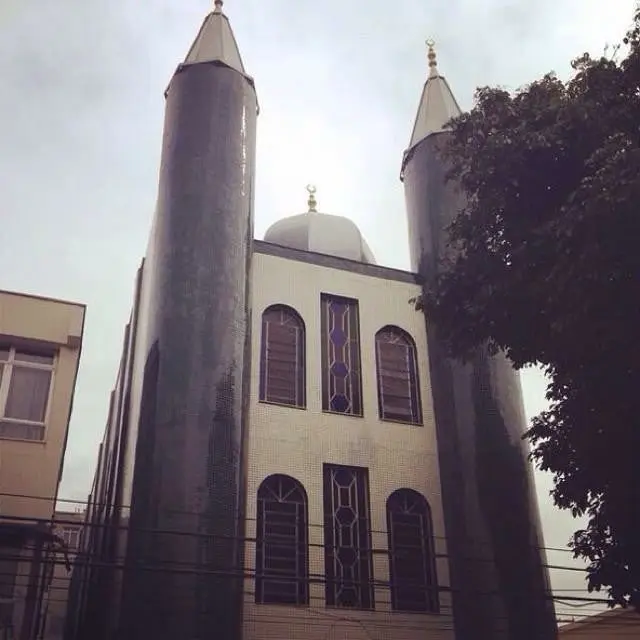
Rio Religioso
- Carioca identity was constructed, in large part, from the religiosities of its inhabitants. The indigenous peoples, first inhabitants of the region, possessed a relationship with the sacred deeply linked to nature, ancestral spirits, and the cycles of life. With the arrival of the Portuguese, Catholicism was imposed as the official religion, also serving as an instrument of cultural and social domination. Subsequently, the trafficked Africans brought with them a rich diversity of beliefs and traditions, which began to reorganize themselves in the new urban context of Rio de Janeiro.
These traditions did not remain isolated: forced contact, repression, and daily coexistence gave rise, over time, to processes of religious syncretism, visible, for example, in the association between Catholic saints and orixás, in popular festivals, and in practices of devotion. Thus, Carioca religiosity formed as a field of exchanges, resistances, and adaptations, reflecting the city's own social history and contributing to an identity marked by cultural and spiritual diversity.
In Rio, marks and landmarks of this meeting of religiosities are scattered throughout the territory, some in an evident way, others not so much. Some are not even sites properly speaking, but they bring such an important sacred charge that they act as a dimension of encounter between the spiritual world and the terrestrial. In the long (and continuous) historical process of the city's formation, many of these meanings were erased or reinterpreted. This gallery brings memories of places important to the diverse beliefs that contributed to our way of being.